
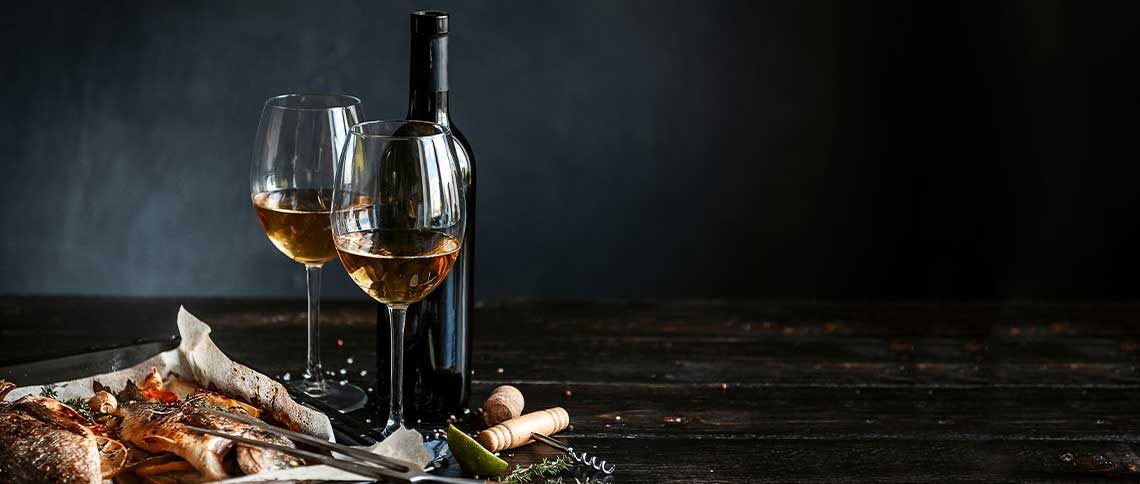
The perfect wine pairing for every dish
No topic occupies wine lovers more than the question of which wine goes with which food. The infinite number of possible combinations often makes it difficult to make the right choice. Nevertheless, there are some basic rules that can serve as guidelines.
The influence of flavours
The most important principle for choosing wine with food is: The kitchen calls the shots! Since the flavours and aromas in food are usually stronger than in wine, it is practically always the dish that supports the wine either positively or negatively.
Questions for flavour analysis
To assess the influence, the question is which flavours are at play:
- Food: Is the dish more salty or sweet? Are there bitter notes or acidity? Does a strong umami flavour dominate?
- Wine: Is the wine dry or sweet? What about the acidity? Is it a fruity or tannin-rich wine?
In the second step, the mutual influence is analysed. If this is assessed as positive, it is a good choice. Otherwise, a different wine should be chosen.
The flavours in wine
- Saltiness and acidity: Enhance the charm (fruitiness, sweetness and body) of the wine. Wines with natural acidity are particularly suitable for salty dishes, such as Sauvignon Blanc, Riesling or Pinot Grigio.
- Sweetness, bitterness and umami: Emphasise the structure (acidity and tannins) of the wine. The wine tastes less fruity and sweet.
Obvious combinations
A simple rule: wine and food from the same region often go well together. The aromas of dishes and wines that have grown together over the centuries generally harmonise naturally.
Wine recommendations for common dishes
- Apéro: Light white wines without barrel ageing such as Petite Arvine or Pinot Blanc.
- Fish: Chardonnay from California, Chile or Australia; Pinot Grigio or Arneis from Italy.
- White meat: Full-bodied white wines or light red wines such as Chardonnay or Viognier; Pinot Noir or Gamay.
- Red meat: Cabernet-based wines for steaks and lamb chops.
- Strongly spiced meat: Malbec, Shiraz and Côtes-du-Rhône; red wines with spicy notes such as Syrah or Cabernet Franc.
- Asian noodle dishes: Dry Champagnes and Cavas.
- Asian and Indian dishes: Rieslings, Gewürztraminers and Vouvrays.
- Pasta and braised dishes: Barbera and Sangiovese.
- Dishes with lots of cheese: Dry rosé goes well with many types of cheese.
- Light vegetarian dishes: Grüner Veltliner, Albariño or Vermentino.
- Fruity desserts: Moderately sweet sparkling wines such as Moscato d’Asti.
- Sweet desserts: Dessert wines should be matched to the sweetness of the dessert.
With these tips, you’ll find the perfect wine pairing for every dish and impress your guests with harmonious combinations!